
Views: 0 Author: Site Editor Publish Time: 2026-04-06 Origin: Site


Waste at the checkout counter often looks small, but over weeks and months it becomes a real operating cost. Extra copies, long layouts, unnecessary reprints, and poorly matched rolls all increase Receipt Paper consumption without adding value for either the retailer or the customer. At ShenZhen United Foison Technology CO, LTD., we supply thermal paper products to global markets, and this article focuses on practical ways retailers can reduce waste without slowing checkout, lowering print clarity, or making the buying experience less convenient.
The easiest way to reduce receipt waste is to question how much is being printed in the first place. Many stores still follow habits that were created years ago, when digital systems were less common and paper records were treated as the default for almost every transaction. Today, that approach often creates unnecessary printing rather than better control.
A large number of customers no longer need a printed receipt for every purchase. For quick retail transactions, many shoppers prefer email or e-receipts because they are easier to keep, harder to lose, and do not create immediate paper clutter. When stores make digital receipts a normal option instead of a special request, they can reduce receipt paper waste quickly.
This works best when the process is simple. Cashiers should be able to ask customers naturally, and the POS system should make digital delivery easy to select. When done well, this change feels less like a sustainability campaign and more like a convenience upgrade. That is important, because customers usually respond better to practical convenience than to abstract messaging.
Digital receipts are especially useful for repeat customers, loyalty members, and stores with high transaction counts. Over time, even a modest reduction in printed receipts can save a significant amount of paper.
A second source of waste comes from inside the business itself. Many retailers still print duplicate merchant copies, internal records, or extra payment slips even when those records are already stored electronically. In many stores, these copies continue because of routine rather than actual need.
This kind of waste is easy to ignore because it happens in small amounts across many transactions. But when an unnecessary extra copy is printed for every sale, paper use rises quickly. Managers should review current checkout procedures and ask which printed copies are still required and which are simply leftovers from older workflows.
Removing unnecessary internal copies is one of the most direct ways to reduce paper use. It saves material, reduces clutter at the counter, and helps staff focus on faster transaction handling.
Receipt waste is not only about how often the printer runs. It is also about how long each receipt is. A retailer may print only one receipt per transaction and still waste paper if that receipt contains too much unnecessary content. Across hundreds or thousands of sales, even small layout changes can produce meaningful savings.
Many receipts are longer than they need to be because of formatting choices rather than transaction details. Large blank spaces, repeated store information, long disclaimers, oversized headers, and extended footer text all add length. On one receipt, the difference seems minor. On a full day of trading, it can become substantial.
A practical review of the receipt layout can often identify immediate improvements. Stores should look carefully at sample receipts and remove or shorten any text that does not clearly support the transaction. Return policies can usually be written more clearly in fewer lines. Extra spacing between items can often be reduced. Non-essential footer content can be moved or simplified.
Shorter receipts not only reduce paper use. They also make the printed information easier for customers to read quickly at the counter.
Retailers often want receipts to support branding or promotional activity, but that does not mean the main body of the receipt should be overloaded with marketing text. When the transaction area becomes too crowded, receipts grow longer and paper use increases without necessarily improving marketing results.
A better approach is to keep the core receipt body focused on essential purchase information while using cleaner design and more efficient space planning. Where relevant, selected branding or promotional messages can be placed more compactly or printed on the reverse side rather than extending the customer-facing transaction content.
This helps reduce waste while keeping the receipt organized and professional. A well-designed receipt should feel easy to read, not overloaded.
Common Source of Receipt Waste | Better Alternative | Expected Benefit |
Printing a receipt for every transaction | Offer digital receipts where appropriate | Lower paper use and less checkout clutter |
Printing duplicate merchant copies | Keep only required records | Less internal waste |
Long disclaimers and oversized spacing | Use tighter layout and shorter text | More transactions per roll |
Promotions filling the receipt body | Use compact design or back printing | Better space efficiency |
Frequent reprints due to poor setup | Standardize templates and settings | Less avoidable paper loss |
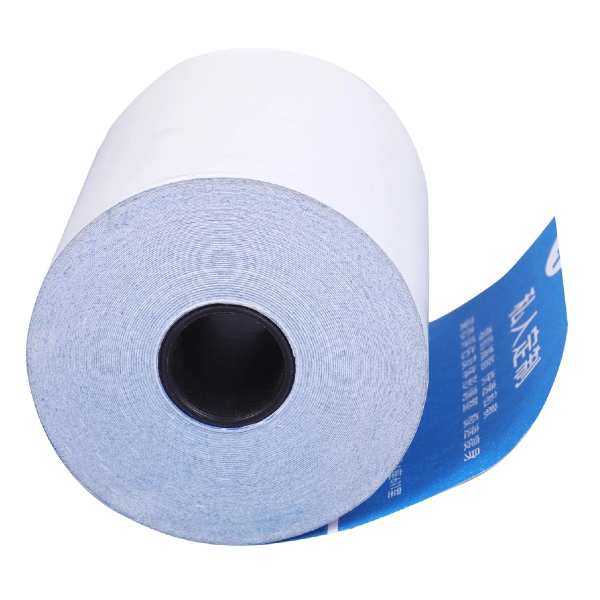
Reducing waste is not always about using less paper per roll. It is also about choosing the right roll specification for the store’s actual operating needs. A roll that does not fit the business well may create more waste even if its purchase price looks attractive.
Some buyers assume a longer roll automatically means more waste, but that is not necessarily true. In a high-volume retail environment, a well-matched longer roll can reduce the number of roll changes during the day. That matters because every roll replacement creates opportunities for waste through extra feed, partial use, interrupted printing, or unnecessary reprints.
When roll length matches transaction volume, the checkout process becomes more stable and efficient. Fewer interruptions also improve the staff experience during busy periods. For many retailers, the goal should not be to buy the shortest possible roll, but to buy the most suitable one.
This is where full meters and stable roll length become important. Consistent roll length helps stores manage consumption more accurately and avoid surprises in day-to-day operations.
Roll size mismatch is another common source of hidden loss. If the width, diameter, or core size does not fit the printer properly, the result may be poor feeding, extra blank paper, unstable roll movement, or incomplete use of the roll. These problems create waste before the customer even sees the receipt.
A correctly matched roll helps the printer operate smoothly and allows the store to use more of the roll effectively. Custom core options and proper sizing are especially valuable for businesses with specific printer models or unusual usage patterns. The closer the roll matches the real application, the less waste the store is likely to generate.
Even a good receipt setup will not reduce waste if checkout habits stay the same. Staff behavior has a direct impact on how much paper is used every day. If cashiers automatically print every copy, reprint too quickly, or ignore layout problems customers regularly notice, paper-saving efforts will have limited results.
Training should therefore include paper usage as part of checkout quality. Staff should understand when a digital receipt is appropriate, when a reprint is actually needed, and when recurring receipt complaints should be reported for adjustment. Small daily actions matter. Asking whether the customer wants a printed receipt, checking the printer before reprinting, and paying attention to repeated waste patterns all help reduce unnecessary use.
Retailers often focus on system settings, but long-term results usually come from combining better settings with better staff habits.
Waste reduction is closely tied to material quality. Better receipt paper helps businesses use more of each roll effectively by reducing failed prints, poor feeding, excess dust, and avoidable reprints. If a roll is poorly wound, inconsistent in length, or rough at the edges, paper loss increases even when the store’s printing policy is already efficient.
At ShenZhen United Foison Technology CO, LTD., we have focused on paper products production and export since 2008, supplying thermal paper, offset paper, carbonless paper, and adhesive labels to customers worldwide. For retailers, features such as full meters, custom core options, custom print support, smooth winding, accurate roll length, and stable coating all support a lower-waste operation. Clean cuts and consistent quality help stores reduce failed prints and make better use of every roll.
Reducing receipt waste comes from practical decisions rather than one single change. Retailers can lower paper consumption by printing only what is needed, shortening receipt layouts, choosing the right roll size, improving staff habits, and using paper that performs consistently in daily use. At ShenZhen United Foison Technology CO, LTD., we see this as both a cost-control issue and an efficiency issue for modern retail operations. If your store is looking for reliable thermal receipt rolls that support clearer printing and lower waste, contact us to discuss the right paper solution for your business.
The fastest method is usually to stop printing unnecessary receipts and extra internal copies. Digital receipt options can also reduce daily paper use immediately.
Yes. Small changes to spacing, footer text, and repeated information can save a large amount of paper over many transactions.
Yes. Incorrect width, diameter, or core size can cause feeding issues, extra blank paper, and incomplete use of the roll.
Better receipt paper supports smoother feeding, clearer printing, and more stable roll performance, which helps reduce reprints and unnecessary paper loss.


