
Views: 0 Author: Site Editor Publish Time: 2026-04-10 Origin: Site


Buying Receipt Paper sounds simple until the printer starts feeding blank rolls, printing poorly, or rejecting the paper entirely. In most cases, the problem is not the roll size first. It is compatibility. The real question is what kind of printer your POS system uses and which paper that mechanism is designed to handle. At ShenZhen United Foison Technology CO, LTD., we supply paper products for customers worldwide, and this guide is meant to help buyers match the right paper to the right printer before purchasing, loading, or replacing rolls.
Many buyers compare thermal paper vs bond paper as if the decision were mainly about thickness, price, or appearance. In reality, the first thing that matters is the print mechanism. Once you know how the printer creates the image, the paper choice becomes much clearer.
Thermal printers create images by applying heat directly to a specially coated paper surface. That is why thermal printers do not need ink ribbons for standard receipt printing. The printer head heats the paper, and the coated layer turns dark where the text or image should appear.
For businesses, this offers several practical advantages. Thermal printing is fast, quiet, and clean. There is no ribbon to replace during normal receipt printing, which makes daily operation simpler. This is one reason thermal printers are widely used for front-counter receipts in retail stores, supermarkets, cafés, convenience stores, and payment terminals.
For buyers, the main point is straightforward: if the printer is a thermal printer, it needs thermal paper. A regular bond roll may fit physically, but it will not work properly because the paper is not designed to react to heat.
Bond paper is different because it is used with impact printers. These printers work by striking an ink ribbon against the paper surface. Instead of heat creating the image, the printer uses mechanical force and ribbon transfer to print text.
This method is older, louder, and slower than thermal printing, but it still has a practical role in some business settings. In restaurants, for example, certain kitchen and back-of-house printers still use bond paper because impact printing performs reliably in environments with heat, steam, and heavy workflow pressure. Some businesses also use 1-ply or 2-ply bond paper when they need ticket copies or specific kitchen workflows.
So the real difference between thermal paper and bond paper is not just the paper itself. It is the type of printer and the way that printer is built to operate.
Thermal Paper vs Bond Paper | Thermal Paper | Bond Paper |
Printer type | Thermal printer | Impact printer |
Print method | Heat on coated paper | Ribbon-based impact printing |
Best use | Front-counter POS receipts, cashier stations, card payment slips | Kitchen tickets, back-of-house printing, some multi-copy uses |
Main limitation | Requires thermal-compatible printer and coated paper | Slower, noisier, needs ribbon replacement |
This is where many buyers make mistakes. A business may assume that one type of POS receipt paper should work across the entire store. But in reality, many stores and restaurants use more than one printer type. The right choice depends on each device, not just the business category.
At the checkout counter, thermal paper is usually the standard option. Most modern front-desk receipt printers are thermal because retailers want fast print speed, quieter operation, sharp output, and simple paper replacement. In supermarkets, convenience stores, boutiques, cafés, and cashier stations, thermal printing fits the pace of daily customer transactions.
This is why thermal receipt paper is often the smarter choice for front-of-house applications. It helps stores keep service moving, reduces routine consumable handling, and supports clear print for sales records and payment receipts. If the POS printer at the counter is thermal, the paper decision is simple: it should use thermal paper, not bond paper.
The confusion usually appears in restaurants and mixed-use POS setups. A store may use thermal printers at the cashier station and impact printers in the kitchen. If buyers assume one paper type fits every printer in the business, they may order the wrong rolls for part of the system.
Kitchen printers often have different demands. Heat, steam, moisture, and constant order flow can make impact printing a practical choice. In these cases, bond paper remains the correct match because the printer is built for ribbon-based printing rather than thermal output.
That is why paper selection should be made printer by printer. A thermal roll may be perfect for the front counter and completely wrong for the kitchen. A bond roll may be right for kitchen order tickets and totally unsuitable for a checkout receipt printer.
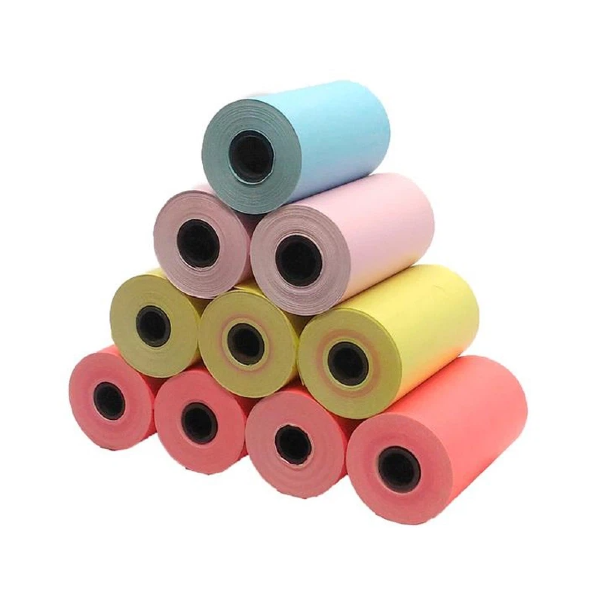
Using the wrong paper creates more than a small inconvenience. It can interrupt service, waste time, and increase daily operating costs. If bond paper is placed in a thermal printer, the printer may feed the paper normally but produce blank output because there is no heat-sensitive coating on the surface. Staff may think the printer is broken when the problem is actually a paper mismatch.
Other problems can follow as well. Businesses may see blank receipts, poor print quality, extra troubleshooting, unnecessary reprints, and wasted rolls. If the roll dimensions are also incorrect, the result may include misfeeds, poor cutting, or unstable paper movement inside the printer.
For a busy business, this is more serious than it sounds. Wrong paper means downtime at the counter, confusion for staff, delays for customers, and wasted supplies. It also creates hidden cost because the cheapest roll becomes expensive once failed use, wasted labor, and disrupted checkout are taken into account.
For everyday front-counter POS applications, thermal paper is often the more efficient choice. It is faster, cleaner, and easier to manage in normal retail operations. Without ribbon replacement, staff can focus on transactions rather than printer maintenance. For businesses that value speed and straightforward operation, this is a major practical advantage.
Thermal paper is especially suitable for retail counters, supermarkets, convenience stores, self-service payment stations, ATM systems, and cashier areas where quick receipt printing matters. The machines are usually compact, the output is clear, and the workflow is simpler for staff during busy hours.
This does not mean bond paper has no value. It means that once thermal compatibility is confirmed, thermal paper is usually the better fit for standard POS receipt printing.
Most businesses choose thermal printing for one reason above all others: it suits modern checkout behavior. Customers want quick service. Cashiers want dependable performance. Managers want fewer interruptions. Thermal printing supports all three.
A thermal printer paired with the right roll helps create a smoother transaction experience. Loading is simple, printing is fast, and the receipt output is neat. In environments where hundreds or thousands of receipts are printed daily, those advantages are not minor. They shape the daily efficiency of the business.
After confirming the correct paper type, buyers should pay attention to quality. Not all thermal rolls perform equally well. Smooth paper surface, even coating, neat slitting, and stable roll tightness all influence how clearly the printer outputs text and how smoothly the paper feeds during use.
Poor-quality rolls can create weak image development, unstable feeding, dust, and wasted paper. Even if the printer type and paper category are correct, inconsistent roll quality can still lead to daily frustration at the checkout counter.
ShenZhen United Foison Technology CO, LTD. has focused on paper products production and export since 2008, supplying thermal paper, offset paper, carbonless paper, and adhesive labels to customers worldwide. For thermal POS applications, smooth rolls, stable coating, neat edges, and reliable winding all support better print clarity and more stable daily operation. Once compatibility is confirmed, quality becomes the factor that helps businesses use their printers more effectively.
The decision is simpler than it first seems. Choose paper based on printer mechanism first, then operating environment, and then roll quality. If the printer is thermal, use thermal paper. If the printer is impact, use bond paper. If a business uses different printers in different areas, the paper choice should also be separated by device. At ShenZhen United Foison Technology CO, LTD., we help customers match the right paper to real POS applications, and when thermal compatibility is confirmed, dependable thermal receipt rolls are often the most practical choice for POS, ATM, and cashier systems. Contact us to discuss your paper requirements.
No. A thermal printer requires heat-sensitive paper. Bond paper does not react to heat, so it will not produce proper printed receipts in a thermal printer.
Because they use different printer types. Front-counter POS printers are often thermal, while some kitchen or back-of-house printers still use impact printing with bond paper.
The most important factor is the printer mechanism. The paper must match how the printer creates the image.
Thermal receipt paper is usually the better choice for front-counter POS printing where businesses want faster output, cleaner operation, and easier day-to-day use.


