
Views: 0 Author: Site Editor Publish Time: 2026-04-17 Origin: Site


Not every roll that looks like Receipt Paper works the same way in real business use. Thermal paper, carbonless paper, and regular bond paper may appear similar at first glance, but they are designed for different printers, different workflows, and different business needs. For buyers choosing paper for POS systems, cash registers, service forms, or older receipt printers, the real question is not which roll looks right, but which paper type actually fits the machine and the job. Since 2008, ShenZhen United Foison Technology CO, LTD. has focused on paper products production and export, supplying thermal paper, offset paper, carbonless paper, and adhesive labels to customers worldwide, and understanding these differences is the first step toward making a better purchasing decision.
Thermal receipt paper is made for printers that create an image through heat. The surface of the paper has a special coating that reacts when the printer head heats it, producing text, numbers, and barcodes directly on the roll. This makes thermal receipt paper fast, clean, and easy to use in busy transaction environments.
That is why it has become the standard choice for many POS systems, cashier stations, card terminals, self-service machines, and ATMs. It prints quickly, does not need an ink ribbon, and supports smooth checkout performance in daily retail use. For supermarkets, convenience stores, pharmacies, cafés, and ticket counters, this speed and simplicity are important advantages.
Thermal paper also reduces one maintenance step because there is no ribbon to replace. In high-volume businesses, that helps improve efficiency and makes daily operation more convenient. But thermal paper only works in thermal printers. If the machine is designed for heat-based printing, thermal receipt paper is the correct and necessary match.
Carbonless receipt paper serves a different purpose. It is designed for situations where a business needs more than one copy of the same transaction, order, or service record. Instead of printing through heat, carbonless paper is used in systems where writing or printing pressure transfers the content to additional layers.
This type of paper is still common in delivery forms, invoices, repair slips, order books, and service documents. A driver may keep one copy, the customer may receive another, and the office may file a third. That is the practical value of carbonless receipt paper. It supports multi-copy workflows without requiring a second printing step.
Carbonless paper is not a substitute for thermal paper. It is linked to a different type of printing system and a different business purpose. If the priority is duplicate or triplicate documentation, carbonless paper remains useful and relevant.
Regular receipt paper is a common search term, but it is not always technically precise. In most cases, buyers use it to mean plain or bond paper that does not have a thermal coating and is not designed as carbonless multi-copy stock. This paper is usually used in printers that rely on a ribbon or impact mechanism.
Clarifying this term is important because many buyers search in practical language rather than technical language. They may ask for regular receipt paper when what they really need is bond paper for a ribbon-based printer. Once that meaning is clear, the comparison becomes easier.
Regular bond paper still has a place in older systems, kitchen printers, back-office equipment, and some legacy receipt environments. It is not the modern default for POS checkout, but it remains necessary where the hardware was built for plain-paper printing.
If a business uses a thermal printer, then thermal receipt paper is the required choice. The printer is designed to apply heat to coated paper, so plain bond paper or carbonless paper will not produce the correct result. This is the first compatibility rule buyers should remember before placing an order.
Most modern front-counter POS printers use thermal rolls. That means businesses in retail, hospitality, and payment processing usually need thermal paper rather than non-thermal alternatives. When the wrong paper is installed, the printer may output blank or unreadable receipts, creating confusion and wasted time.
Impact printers work differently. They use physical contact, often with a ribbon, to create the printed image. Because of that, they are commonly paired with carbonless paper or regular bond paper, depending on whether the business needs duplicate copies.
This is why some kitchens, logistics stations, warehouses, and older business systems still use non-thermal paper. The paper choice is determined by the printer mechanism first. A business cannot simply switch paper categories without checking the hardware.
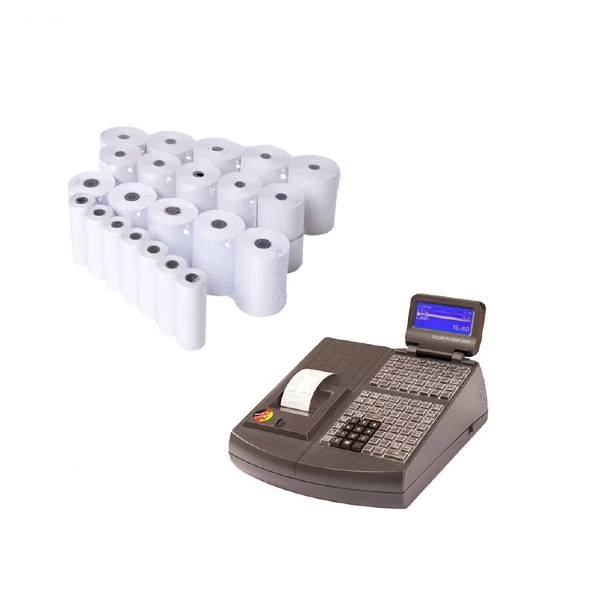
Paper Type | How It Prints | Printer Type | Best Use | Main Advantage | Main Limitation |
Thermal receipt paper | Heat reacts with coated surface | Thermal printer | POS checkout, card terminals, ATMs | Fast printing, no ribbon needed | Only works with thermal printers |
Carbonless receipt paper | Pressure or impact transfers image to extra layers | Impact-style printer | Delivery slips, invoices, service forms | Produces duplicate copies | Not suitable for standard thermal POS printers |
Regular bond receipt paper | Ribbon or impact printing on plain paper | Impact or ribbon-based printer | Legacy systems, kitchen printers, back office use | Plain-paper compatibility | Less efficient for modern POS checkout |
For front-counter sales and high-speed transaction environments, thermal paper is usually the most practical choice. Retail stores, supermarkets, convenience stores, ticket counters, and card-payment businesses benefit from fast output, clear printing, and simple daily use.
Because thermal printers do not require ribbon replacement, they are easier to manage during busy working hours. This makes thermal receipt paper especially suitable for businesses that value speed, consistent print quality, and efficient checkout. In many modern POS environments, it is the most convenient option.
This is also where product quality matters. Good thermal paper supports sharper printing, smoother feeding, and more stable roll performance. ShenZhen United Foison Technology CO, LTD. supplies thermal paper products for customers who need reliable daily printing and smoother machine operation in real commercial settings.
Carbonless paper continues to serve an important role in businesses that need multiple copies of the same record. Delivery companies, repair services, field technicians, and mobile order systems often rely on duplicate paperwork as part of the workflow.
In those situations, carbonless paper remains the better fit because the purpose is not simply to print one receipt quickly. The purpose is to create several copies at the same time. That makes carbonless paper useful even though it is less common in standard retail POS systems.
Some businesses are not comparing paper types freely. They are working with legacy printers that were built for plain bond rolls. In those cases, regular receipt paper is still necessary because the hardware determines the compatible material.
This is common in older restaurant systems, warehouse equipment, and ribbon-based back-office machines. The paper choice is not about following a trend. It is about keeping the printer working correctly.
Once a business confirms that it uses a thermal printer, the next question is thermal paper quality. Not all thermal rolls perform equally. Coating consistency, base paper quality, roll tightness, slitting precision, and dust level all affect the final result.
Higher-quality thermal paper usually delivers cleaner printing, better barcode readability, smoother feeding, and fewer machine interruptions. For businesses that print receipts all day, these details matter. They affect both customer experience and equipment performance.
A well-made roll does more than print clearly. It also supports stable operation over time. That is why many buyers move from basic thermal paper to better thermal receipt paper when they want a more dependable daily solution.
Business purchasing decisions often involve more than paper type alone. Buyers may need BPA-free options, custom widths, different roll lengths, or specific core sizes to match their POS terminals, ATMs, or receipt printers. These are practical requirements, not minor details.
For this reason, a strong thermal paper solution should meet both performance needs and operating requirements. ShenZhen United Foison Technology CO, LTD. focuses on supplying thermal paper, carbonless paper, offset paper, and adhesive labels with stable quality and export-oriented production, helping customers match paper products to real business applications.
The simplest way to choose correctly is to match the paper to the printer and the business task. Thermal receipt paper is the right option for thermal POS printers and fast everyday checkout. Carbonless receipt paper is suitable when duplicate copies are required. Regular bond receipt paper remains necessary for ribbon-based or impact printers in older systems. For many modern businesses, better thermal paper offers the clearest advantage in printing speed, smooth operation, and practical daily performance. Since 2008, ShenZhen United Foison Technology CO, LTD. has supplied paper products for global markets, and if your business needs reliable POS receipt rolls for stable day-to-day use, contact us for more information.
No. Thermal receipt paper only works in thermal printers. If the printer uses a ribbon or impact mechanism, it needs carbonless paper or regular bond paper instead.
Carbonless receipt paper is best when your business needs duplicate or multi-copy records, such as invoices, delivery slips, service forms, or handwritten transaction documents.
In most business use, regular receipt paper means plain or bond paper for ribbon-based or impact printers. It does not have a thermal coating.
Thermal receipt paper is widely preferred in POS systems because it prints quickly, does not need a ribbon, produces clear receipts, and supports efficient daily checkout.


