
Views: 0 Author: Site Editor Publish Time: 2026-05-20 Origin: Site


Ruined inventory causes major operational headaches. It goes far beyond simply throwing away wasted supplies. When you rely on degraded materials, you risk unreadable compliance records, damaged printheads, sudden slitting precision loss, and costly operational downtime.
Thermal coating is highly reactive by design. Preserving a batch requires you to treat it as an active chemical product, not just standard office stationery. The leuco dyes and developers embedded in the surface respond instantly to environmental triggers. If you ignore this chemical reality, you will inevitably lose inventory.
A reliable storage protocol prevents premature degradation. It maximizes your operational efficiency, whether you manage palletized warehouse inventory or oversee retail point-of-sale deployments. We will explore the exact environmental thresholds, chemical hazards, and handling protocols necessary to keep your materials pristine and ready for action.
The Baseline Rule: Maintain storage environments below 25°C (77°F) with 45–65% relative humidity.
Dual Lifespans: Unprinted shelf life typically spans 1–3 years, while printed image life can last 7–25 years if properly protected.
Hidden Threats: Low humidity (<25%) causes static damage, while PVC plasticizers and common cleaning solvents dissolve the thermal coating.
Strategic Sourcing: Investing in top-coated thermal paper provides a physical barrier against chemical and environmental hazards for high-risk applications.
Understanding longevity requires us to separate two distinct metrics. Unprinted viability and post-printing stability measure entirely different chemical phases. Unprinted shelf life defines how long the reactive coating remains viable inside your warehouse. Conversely, printed image life measures the stability of the activated leuco dye after it passes through a printhead.
Retailers and warehouse managers often underestimate the real costs of non-compliance. Fading receipts or prematurely darkened inventory create severe downstream consequences. Blank or illegible records lead to immediate audit failures. Customers lose trust when their warranty receipts fade into blank slips of paper within months. Furthermore, attempting to use compromised, darkened inventory often forces printheads to work harder, accelerating hardware wear and tear.
Longevity is inherently tied to manufacturing decisions. Base paper quality and the specific chemical formulation applied during production dictate how well the material resists environmental stress. Manufacturers blend specific dyes, developers, and sensitizers to hit targeted activation temperatures. If you purchase cheaper, poorly formulated materials, your environmental margins of error shrink dramatically. High-quality base materials provide a much wider safety net against minor warehouse temperature fluctuations.
Strict environmental controls form the foundation of proper inventory management. Ambient warehouse conditions directly dictate how long your materials survive. You must establish baseline metrics to guide your facility managers.
Temperature control dictates the physical color development of the dye. Standard guidelines require you to maintain storage areas between 20°C and 25°C. Physical activation typically begins around 60°C to 100°C. However, lower temperatures can still ruin your stock over time. Prolonged exposure to 40°C in high humidity for 24 hours or more will permanently compromise the roll, causing an irreversible gray background to develop.
Humidity poses an equally dangerous threat. Facility managers must enforce the 45–65% relative humidity (RH) rule. Excessive moisture causes the material to soften, stick together, or warp during slitting operations. Conversely, extremely low humidity below 25% creates a hidden risk factor. Dry air causes the substrate to become brittle. It also generates severe static electricity. These static charges produce micro-sparks capable of damaging the reactive thermal layer before the paper ever reaches a printer.
Light exposure degrades the reactive surface silently. Direct sunlight and indoor fluorescent lighting break down the chemical coating over time. Ultraviolet rays cause noticeable yellowing and accelerate printed image fading. You should institute a strict standard operating procedure (SOP) requiring staff to keep all inventory enclosed in opaque packaging or black polyethylene bags until exact deployment times.
Environmental Factor | Optimal Range | Danger Threshold | Consequences of Failure |
|---|---|---|---|
Temperature | 20°C – 25°C | > 40°C for 24+ hours | Premature darkening, graying backgrounds, leuco dye activation. |
Relative Humidity (RH) | 45% – 65% | < 25% or > 65% | Brittleness and static damage (low); sticking and warping (high). |
Light Exposure | Total darkness | UV or Fluorescent | Yellowing of the base paper, rapid fading of activated images. |
Maintaining proper thermal paper storage requires facility-wide discipline. You must actively monitor these metrics using digital hygrometers and temperature sensors. A simple HVAC malfunction over a weekend can destroy thousands of dollars in sensitive inventory.
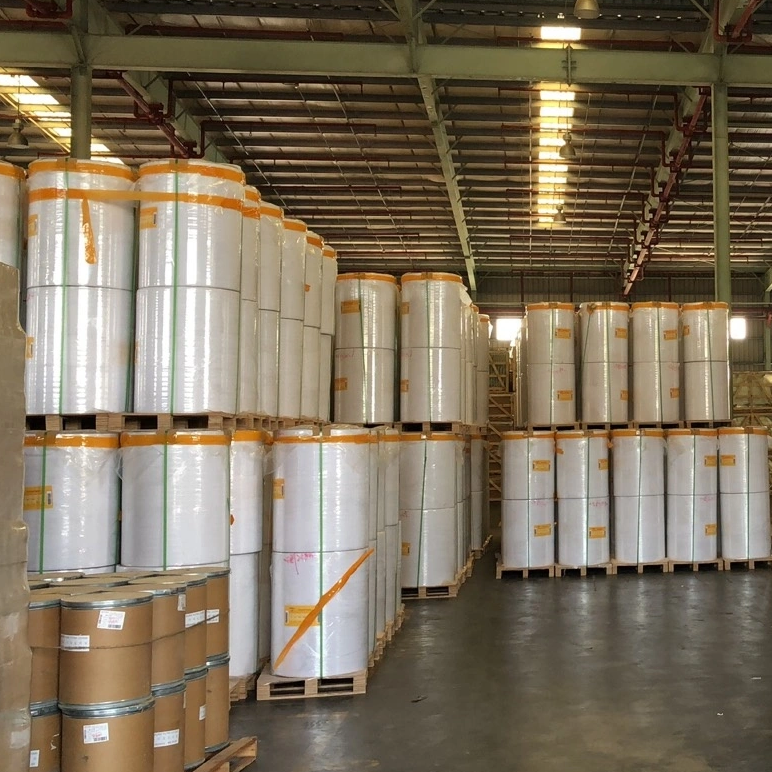
Even if you perfect your warehouse temperature, invisible chemical and physical hazards can still destroy your stock. The reactive coating acts like a sponge for incompatible chemicals. You must isolate your inventory from common workplace substances.
Chemical incompatibility requires strict oversight. We refer to this as the "Ban List." Keep your inventory far away from the following materials:
Plasticizers: PVC films, synthetic folders, and specific clear tapes contain ester-based plasticizers. These esters migrate into the paper and rapidly fade the printed images.
Organic Solvents: Alcohols, ketones, petroleum-based solvents, and ammonia cleaners instantly penetrate the surface. They can either erase existing prints or pre-activate the dye, turning the entire thermal roll completely black.
Biologicals: Human skin oils and sweat naturally break down the coating. Direct fingerprint contact often leaves faded spots on the surface.
Physical handling risks also cause significant damage. Friction generates intense, localized heat. Sliding heavy pallets across a floor, dropping boxes, or simply scratching the surface with fingernails will prematurely mark the paper.
You must regularly audit your physical storage locations. Avoid these high-risk areas entirely:
Vehicle Interiors: Summer cabin temperatures easily exceed 60°C, baking the leuco dye instantly.
Commercial Kitchens: Airborne grease, steam, and ambient oven heat degrade the protective layers.
Walk-in Coolers: Rapid temperature shifts upon exiting a cooler cause immediate condensation, soaking the material.
Windowsills: Concentrated UV exposure and localized heat spikes ruin the outer layers in days.
Common Mistake: Warehouse workers often use cheap PVC packaging tape to reseal partial boxes. The plasticizers in the tape seep through the top layers, destroying the usable material underneath. Always use starch-based or polyolefin-safe tapes for resealing.
Large-scale supply chains demand rigorous handling protocols. Small mistakes compound as materials move from manufacturing facilities to retail backrooms. Standardizing your approach prevents unexpected losses.
The Acclimation Rule stands as a critical defense against moisture damage. When you store materials in an uncontrolled environment, you must require a 24-hour acclimation period before opening the packaging. Move the sealed boxes into the climate-controlled production or printing room. Allowing the temperature to equalize slowly prevents severe thermal shock and sudden condensation from forming on the paper surface.
Palletizing and stacking mechanics heavily influence physical integrity. Follow these specific mechanical guidelines:
Store Vertically: Always position rolls upright. Laying them flat causes core deformation. A crushed core destroys slitting precision, which proves especially disastrous when processing a heavy thermal jumbo roll through automated machinery.
Avoid Wire Shelving: Mesh or wire racks concentrate gravitational pressure into narrow lines. This pressure creates deep physical indents straight through the outer layers. Always use solid, flat shelving materials.
Limit Stack Heights: Do not stack boxes beyond the manufacturer's recommended height, typically 5 to 6 cartons high. Excessive weight crushes the bottom tiers.
Inventory management lifecycles require strict routing. You must enforce First-In, First-Out (FIFO) routing methodologies. Older inventory must rotate to the front of the line. Furthermore, never discard the original carton label. This label acts as the critical traceability "birth certificate" for the batch. If a specific chemical formulation fails prematurely, that label contains the exact lot numbers required for manufacturer warranty claims.
Best Practice: Conduct weekly spot checks on your oldest inventory. Look for subtle graying along the edges. If you notice discoloration, your environmental controls may be failing, or you may be exceeding the recommended shelf durations.
Not all environments allow for pristine storage. Sometimes, your operational reality dictates exposure to heat, friction, or chemicals. When you assess your operational environment, you must determine if your specific use case requires standard material or upgraded protective engineering.
Standard materials provide a highly cost-effective and reliable solution. However, they demand strict compliance. You must keep the environment entirely temperature-controlled and free of chemical contaminants. Standard formulations work perfectly for short-lived grocery receipts, temporary ticketing, and well-managed retail backrooms.
Top-coated varieties feature an additional protective layer engineered directly over the reactive chemistry. This physical barrier seals the leuco dyes away from environmental hazards. It provides excellent temporary resistance to moisture, mild physical friction, and incidental chemical contact. For example, a top-coated barrier protects against brief exposures to hand sanitizers, cleaning sprays, or PVC plasticizers found in wallets.
Use this shortlisting logic when upgrading your supply. We highly recommend top-coated options for heavy-duty POS thermal roll deployments in kitchens or outdoor settings. They also excel in industrial labeling applications where oils and dust are present. For archival compliance—such as medical records or financial audits—top-coated chemistry can successfully extend the viable image life up to 25 years.
Feature Matrix | Standard Thermal Paper | Top-Coated Thermal Paper |
|---|---|---|
Chemical Resistance | Low (Highly vulnerable to oils and solvents) | High (Resists incidental plasticizer/solvent contact) |
Moisture Tolerance | Poor (Absorbs humidity quickly) | Excellent (Repels condensation and dampness) |
Friction Durability | Moderate (Scratches easily) | High (Resists heavy mechanical handling) |
Typical Use Case | General retail, short-term receipts | Kitchen dockets, industrial tags, archival records |
Choosing the correct thermal paper ultimately depends on your downstream applications. If your deployment environment exposes materials to harsh conditions, spending slightly more on top-coated stock prevents massive operational failures down the line.
Effective preservation requires a disciplined approach. You must blend strict environmental control, chemical isolation, and rigorous warehouse handling. Treating the coating as a sensitive chemical matrix rather than simple office stationery drastically improves your operational outcomes.
Take immediate action to secure your supply chain. First, conduct a thorough inventory audit of your current storage locations. Check for windowsills, unventilated corners, or proximity to industrial cleaning supplies. Second, implement a strict FIFO rotation policy to ensure older batches do not expire silently on the shelves. Finally, evaluate whether your current vendor's formulation truly aligns with the realities of your operating environment. Upgrading to top-coated variants may solve ongoing degradation issues immediately.
A: No. Moving paper from cold storage to room temperature causes sudden condensation. This trapped moisture damages the reactive coating, warps the paper structure, and ultimately leads to severe printer jams during operation.
A: Vehicle interiors routinely exceed the 60°C activation threshold of the leuco dye during summer months. This intense, trapped heat essentially "prints" the entire roll at once, triggering the chemical reaction across the whole surface.
A: When kept in an airtight, dark, and climate-controlled environment, unprinted shelf life typically reaches 1 to 3 years depending on the manufacturer's specific chemical formulation and base material quality.
A: Standard clear plastic wrap offers minimal moisture barrier protection. Hermetically sealed or specialized moisture-resistant polyethylene bags are strictly required for reliable long-term storage and environmental isolation.


